Essential Construction Daily Site Log Book
The Construction Daily Site Log Book is a comprehensive tool designed to help construction professionals maintain detailed and organized records of daily activities, ensuring smooth project management and compliance. This log book is an indispensable resource for anyone in the construction industry, providing a structured format to document essential information systematically.
Key Features and Strengths
The Construction Daily Site Log Book comes with several key features that make it a valuable asset:
- Editable Formats: The pack includes EPS and AI files, allowing for easy customization to fit specific project needs.
- Ready-to-Use PDF: A PDF file is provided, ready for immediate upload or print, saving time and effort.
- Comprehensive Pages: With 120 pages, it offers ample space to record detailed information over an extended period.
- Convenient Size: Measuring 8.5×11 inches, it is perfect for carrying around on-site without being cumbersome.
- No Bleed Design: The no-bleed design ensures clean and professional-looking pages, ideal for both digital and print use.
Detailed Sections for Effective Documentation
The log book is divided into several sections, each designed to capture critical information:
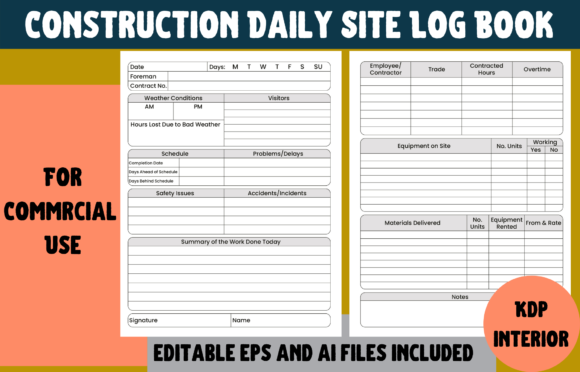
- Date and Day: Clearly marked days of the week (M T W T F S SU) for easy tracking.
- Foreman and Contract No.: Space to record the foreman's name and contract number for accountability.
- Weather Conditions: A section to note weather conditions, which can impact project timelines.
- Hours Lost Due to Bad Weather: Document any lost hours due to adverse weather, helping in planning and adjustments.
- Visitors: Record all visitors to the site, enhancing security and communication.
- Schedule: Outline the day's schedule, keeping everyone informed and on track.
- Problems and Delays: Document any issues or delays, aiding in problem-solving and future planning.
- Safety Issues: Record safety concerns and incidents, promoting a safer work environment.
- Accidents and Incidents: Detailed documentation of any accidents or incidents, crucial for legal and safety purposes.
- Summary of the Work Done Today: A summary section to provide an overview of the day's accomplishments.
- Signature and Name: A place for the responsible person to sign, adding a layer of verification.
- Employee/Contractor Details: Track employee and contractor information, including trade, contracted hours, and overtime.
- Equipment on Site: List all equipment, noting whether it is working or not, for maintenance and operational efficiency.
- Materials Delivered and Equipment Rented: Record deliveries and rentals, including quantities and rates, for accurate billing and inventory management.
- Notes: Additional space for any other relevant information or observations.
Practical Applications Across Various Environments
The Construction Daily Site Log Book is versatile and can be used in multiple settings:
- Personal Use: For individual contractors or small teams, it helps in maintaining a clear and organized record of daily activities.
- Professional Settings: In larger construction firms, it serves as a standardized tool for consistent and reliable documentation.
- Educational Purposes: It can be used in training programs to teach students about the importance of thorough record-keeping in construction projects.
- Creative Projects: For creative and design-focused construction projects, it provides a structured way to document unique requirements and progress.
- Digital Integration: The editable formats (EPS and AI) allow for seamless integration with digital tools, making it easy to share and update information electronically.
- Commercial Use: In commercial construction, it helps in managing large-scale projects by providing a centralized repository for all essential data.
Potential Benefits and Real-World Examples
Using the Construction Daily Site Log Book can bring numerous benefits:
- Enhanced Usability: The well-organized sections make it easy to find and record information, improving overall usability.
- Increased Efficiency: By having a structured format, it streamlines the documentation process, saving time and reducing errors.
- Better Communication: Clear and detailed records facilitate better communication among team members, clients, and stakeholders.
- Improved Branding: The professional appearance of the log book reflects positively on the company, enhancing its brand image.
- Enhanced Productivity: With all necessary information at hand, project managers can make informed decisions quickly, boosting productivity.
- User Experience: The user-friendly design and convenient size make it a pleasure to use, encouraging regular and thorough documentation.
For example, a construction firm might use the log book to track the progress of a new residential development. Each day, the foreman would fill out the log, noting the weather, any delays, and the work completed. This information is then used to adjust schedules, address issues, and ensure the project stays on track. In another scenario, a small contractor might use the log book to document the installation of a new roof, recording materials delivered, equipment used, and any safety concerns, ensuring a smooth and safe project completion.
Practical Considerations and Recommendations
When selecting and using the Construction Daily Site Log Book, consider the following:
- Customization: Utilize the editable formats to tailor the log book to your specific project needs, ensuring it captures all necessary information.
- Training: Provide training for team members on how to use the log book effectively, ensuring consistent and accurate documentation.
- Regular Review: Regularly review the log book entries to identify trends, issues, and areas for improvement, enhancing project management.
- Integration with Digital Tools: Consider integrating the log book with digital project management tools for a more streamlined and accessible record-keeping system.
- Backup and Storage: Ensure that the log book is stored securely, and consider creating digital backups to prevent data loss.
In conclusion, the Construction Daily Site Log Book is a powerful tool for construction professionals, offering a structured and efficient way to manage and document daily activities. Its versatility, practicality, and professional design make it an essential part of any construction project, enhancing productivity, communication, and overall project success.