Streamline Your Maintenance with a Filter Replacement Log and Air Filter Log
Maintaining the air quality in your home, office, or vehicle is crucial for health and comfort. A Filter Replacement Log and Air Filter Log are essential tools that help you keep track of when filters were last changed and when they need to be replaced. This article will guide you through how these logs can fit into your broader maintenance process and provide practical tips for their effective use.
Understanding the Filter Replacement Log and Air Filter Log
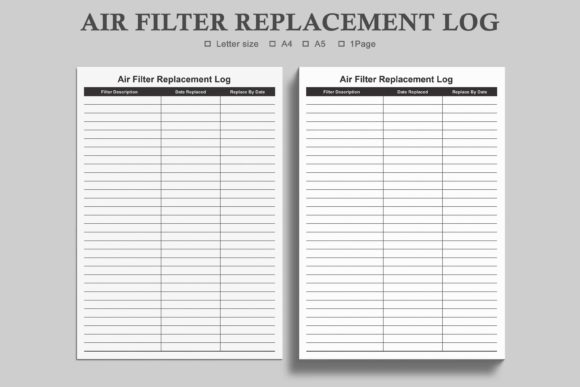
The Filter Replacement Log and Air Filter Log are simple yet powerful tools designed to help you manage the replacement schedule of air filters. These logs are typically available in PDF format, making them easy to print and use. The top of the form is labeled "Replacement Filter Log," followed by columns for "Filter Description," "Date Replaced," and "Replace by Date." Each row allows you to handwrite the necessary information, ensuring you never miss a critical filter change.
Integrating the Filter Replacement Log into Your Workflow
Before starting any project or routine that involves air quality, it's important to have a clear plan. The Filter Replacement Log can be an integral part of this plan. Here’s how you can integrate it:
- Preparation: Print out the log and place it in a visible and accessible location, such as near your HVAC system or in the glove box of your car.
- Initial Setup: Fill in the details of the current filter, including its description and the date it was installed. Use the "Replace by Date" column to set a reminder for the next replacement.
- Ongoing Maintenance: Regularly check the log to see if any filters are due for replacement. This helps in maintaining a consistent and efficient air quality management system.
Practical Implementation Tips
To make the most of your Filter Replacement Log and Air Filter Log, consider the following tips:
- Set Reminders: Use digital reminders or calendar entries to alert you when a filter needs to be replaced. This ensures you stay on top of your maintenance schedule.
- Keep It Visible: Place the log in a high-traffic area where it can be easily seen and accessed. This makes it more likely for you and others to update it regularly.
- Involve Others: If multiple people are responsible for the maintenance, ensure everyone knows where the log is and how to use it. This promotes shared responsibility and consistency.
Compatibility and Usability
The Filter Replacement Log and Air Filter Log are designed to be user-friendly and compatible with various settings. They come in different sizes (US Letter, A4, A5) and formats (PDF and JPEG), allowing you to choose the one that best fits your needs. The minimalist, ink-friendly design ensures that the log is both professional and easy on the eyes, making it a valuable addition to any maintenance toolkit.
Long-Term Use and Quality Control
Consistency is key in maintaining air quality. By using the Filter Replacement Log and Air Filter Log over time, you can establish a reliable record of all filter changes. This not only helps in maintaining a clean and healthy environment but also provides a history that can be useful for troubleshooting and future planning. Regularly reviewing and updating the log ensures that your air quality remains at its best, contributing to the overall well-being of the space and its occupants.
Conclusion
Incorporating a Filter Replacement Log and Air Filter Log into your maintenance routine is a simple yet effective way to manage air filter replacements. By following the tips and integrating these logs into your workflow, you can ensure that your air quality is consistently maintained, leading to a healthier and more comfortable environment. Whether you're managing a home, office, or vehicle, these logs are indispensable tools for anyone committed to maintaining high standards of air quality.